NAD+

Independent guide to NAD+ injections
NAD injection benefits checked against the evidence: which claims rest on cell and animal research and which lack controlled human trials. No hype here.
In published research, the majority of participants tolerated supplementation without serious adverse events. Most side effects were mild, transient, and self-resolving.
Clinic menus list NAD injection benefits such as more energy, slower ageing and easier weight loss, yet human evidence for injectable NAD+ on each of those outcomes is limited, and weight-loss claims are not supported by controlled human trials. That mismatch between marketing and data is the whole subject of this page. I go claim by claim and sort each one by the kind of evidence behind it.
Injectable NAD+ is not an FDA-approved drug. Anything described below as a finding comes from cell or animal research unless stated otherwise, and none of it is a promise of results in people.
Nearly every NAD injection benefit claim traces back to one well-supported observation: NAD+ is a coenzyme central to energy metabolism, and many studies find that its levels decline with age. From there, marketing makes a leap. If levels fall, the argument goes, topping them up should reverse the effects of that fall.
The pattern shows up in how NAD injection benefits are usually worded. Clinic copy tends to say NAD+ "supports" energy or "promotes" healthy ageing, phrases that sound like results but describe a mechanism. When I read these pages, I look for a single sentence that names a human trial of injected NAD+ and a measured outcome. It is rarely there.
That leap is a hypothesis, not a result. Showing that a molecule declines with age does not show that adding it back by injection changes anything a person would notice. To show that, you need controlled human trials of the injected product, and those are where the record is thinnest.
The claims fall into three groups: supported in cells and animals, plausible but untested in people, and not supported. This table sorts the most common ones.
| Claim | Where the evidence sits | Status in people |
|---|---|---|
| NAD+ is central to cellular energy metabolism | Established biochemistry | Not a benefit claim on its own |
| NAD+ levels fall with age | Reported in many studies | Observation, not a treatment effect |
| Injections raise energy | Mostly cell and animal models | Not confirmed in controlled trials |
| Injections slow ageing | Mostly cell and animal models | Not confirmed in controlled trials |
| Injections cause weight loss | No controlled human trial support | Not supported |
The weight claim is the weakest of the group, which is why it gets its own page: NAD injections for weight loss.
Animal and cell findings rarely carry over to people at the same size or in the same direction. A cell culture has no liver, kidneys or immune system to process a compound. A mouse metabolizes molecules at a different rate from a person and lives a fraction of the time.
There is also the question of route. Some of the NAD+ discussion online concerns oral precursors such as NMN and NR rather than injected NAD+ itself. When a seller cites "NAD research" to support an injection, check which molecule and which route the cited work actually used. We compare those molecules on our NAD vs NMN vs NR page.
Another check buyers rarely do: whether a study measured a feeling, such as energy, or a lab marker. Feelings are easily moved by expectation, which is why only placebo-controlled trials can settle energy claims.
A prescriber weighs your medical history, other medications and goals against the limited human data before writing a prescription for compounded NAD+. That is the value of a telehealth service such as Arc-1, whose $299.99 NAD+ Injections program includes a physician consultation and a pharmacy-compounded product.
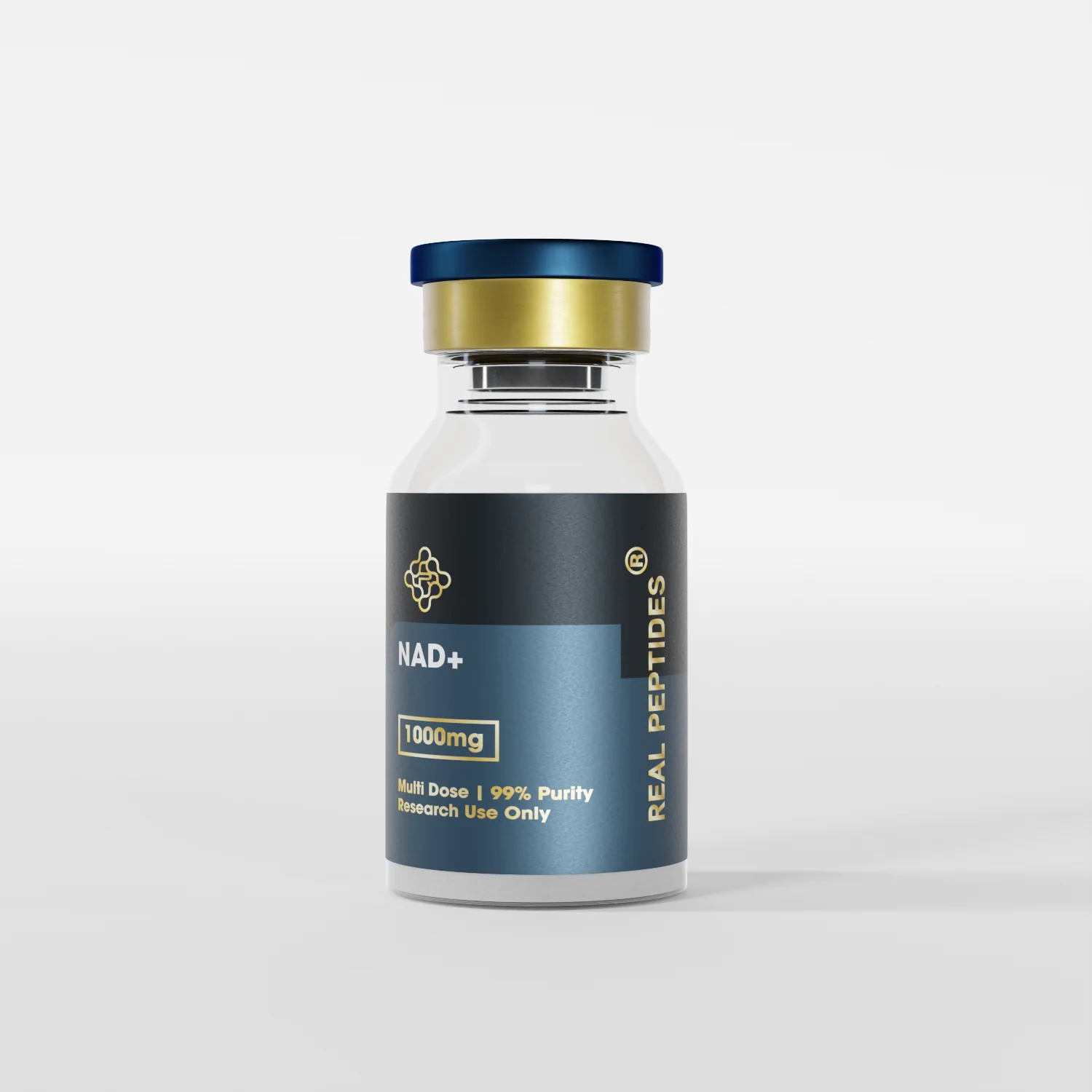
A research vial cannot give you that assessment. Real Peptides' $60.00 NAD+ multi-dose vial is sold for research use only and comes without any consultation, so it is not a route to the benefits clinics advertise. If you are weighing NAD+ for your own health, talk to your doctor first. Our page on NAD injection prescriptions explains how the telehealth intake works.
A quick screen catches most overstated NAD+ marketing. We use these checks on any clinic page or product listing:
Research vendors face the opposite pressure. FDA's August 2026 warning letters treated disease claims on vendor websites as evidence of intended human use, so a research seller listing NAD injection benefits for people would be inviting enforcement. That is one reason the Real Peptides listing describes features such as the COA and format rather than effects.
A listing that fails most of these is selling a story. The side effects page covers what clinics report on the downside, which belongs in any honest benefit discussion.
Clinic menus list NAD injection benefits such as more energy, slower ageing and easier weight loss, yet human evidence for injectable NAD+ on each of those outcomes is limited, and weight-loss claims are not supported by controlled human trials. That mismatch between marketing and data is the whole subject of this page. I go claim by claim and sort each one by the kind of evidence behind it.
Injectable NAD+ is not an FDA-approved drug. Anything described below as a finding comes from cell or animal research unless stated otherwise, and none of it is a promise of results in people.
Nearly every NAD injection benefit claim traces back to one well-supported observation: NAD+ is a coenzyme central to energy metabolism, and many studies find that its levels decline with age. From there, marketing makes a leap. If levels fall, the argument goes, topping them up should reverse the effects of that fall.
The pattern shows up in how NAD injection benefits are usually worded. Clinic copy tends to say NAD+ "supports" energy or "promotes" healthy ageing, phrases that sound like results but describe a mechanism. When I read these pages, I look for a single sentence that names a human trial of injected NAD+ and a measured outcome. It is rarely there.
That leap is a hypothesis, not a result. Showing that a molecule declines with age does not show that adding it back by injection changes anything a person would notice. To show that, you need controlled human trials of the injected product, and those are where the record is thinnest.
The claims fall into three groups: supported in cells and animals, plausible but untested in people, and not supported. This table sorts the most common ones.
| Claim | Where the evidence sits | Status in people |
|---|---|---|
| NAD+ is central to cellular energy metabolism | Established biochemistry | Not a benefit claim on its own |
| NAD+ levels fall with age | Reported in many studies | Observation, not a treatment effect |
| Injections raise energy | Mostly cell and animal models | Not confirmed in controlled trials |
| Injections slow ageing | Mostly cell and animal models | Not confirmed in controlled trials |
| Injections cause weight loss | No controlled human trial support | Not supported |
The weight claim is the weakest of the group, which is why it gets its own page: NAD injections for weight loss.
Animal and cell findings rarely carry over to people at the same size or in the same direction. A cell culture has no liver, kidneys or immune system to process a compound. A mouse metabolizes molecules at a different rate from a person and lives a fraction of the time.
There is also the question of route. Some of the NAD+ discussion online concerns oral precursors such as NMN and NR rather than injected NAD+ itself. When a seller cites "NAD research" to support an injection, check which molecule and which route the cited work actually used. We compare those molecules on our NAD vs NMN vs NR page.
Another check buyers rarely do: whether a study measured a feeling, such as energy, or a lab marker. Feelings are easily moved by expectation, which is why only placebo-controlled trials can settle energy claims.
A prescriber weighs your medical history, other medications and goals against the limited human data before writing a prescription for compounded NAD+. That is the value of a telehealth service such as Arc-1, whose $299.99 NAD+ Injections program includes a physician consultation and a pharmacy-compounded product.
A research vial cannot give you that assessment. Real Peptides' $60.00 NAD+ multi-dose vial is sold for research use only and comes without any consultation, so it is not a route to the benefits clinics advertise. If you are weighing NAD+ for your own health, talk to your doctor first. Our page on NAD injection prescriptions explains how the telehealth intake works.
